Long-distance group gifts . October 2, 2026 . 8 min
How to Organize a Surprise Group Gift Across Time Zones and Distance
The hard part is the calendar
A surprise group gift across time zones usually breaks on the calendar, long before it breaks on the budget. Someone is always asleep. Someone else is in back-to-back meetings. A live call that works for New York breaks Sydney. A same-day video montage ask fails when half the circle will not film after dinner in their zone.
This playbook is for the organizer who wants one keepsake from people scattered across cities and countries. It covers an async timeline, surprise logistics, format choices (voice, board, video, or hybrid), invite copy, and delivery timing that respects the recipient's morning.
Why live coordination fails for long-distance surprises
Three traps show up again and again. First, waiting for a shared hour forces late-night or early-morning asks that people skip. Second, filmed messages raise camera anxiety on top of distance. Third, shipping a physical gift to one address leaves out the people who cannot meet the courier deadline.
Async collection fixes the hour problem. A shareable link lets each person contribute when they are free. The organizer still needs a deadline, a prompt, and a plan for who delivers the finished gift without spoiling the surprise.
What the surprise actually needs
Name one organizer who is not the recipient and who can keep a private chat alive. Pick the format before you invite anyone. Decide who holds the delivery moment (partner, sibling, roommate, or a scheduled message the recipient opens alone). Set a contribution window of 7 to 14 days so distant cousins are not racing a 24-hour clock. Write one specific prompt. Vague "say something nice" invites get half-finished replies.
Two-week async timeline (adjust for shorter notice)
Days 14 to 12: Choose format and owner. Confirm the surprise is still a surprise. Build a contributor list with time zones noted only so you can set a fair deadline (do not require anyone to join a live call). Cap the invite list to a size your tool can handle.
Days 11 to 8: Send the invite in a private group chat or individual messages. Include the link, the prompt, the deadline in a clear local-agnostic form (example: Sunday 11:59 p.m. recipient's city time), and a note that no filming is required if you chose voice or a board.
Days 7 to 3: One mid-window reminder. Offer an alternate path (typed note if the main ask is voice; voice if the main ask is video). Do not shame people who are quiet.
Days 2 to 1: Review contributions. Remove anything an author asks to pull. Schedule delivery for a calm hour in the recipient's zone, not during their workday if you can help it.
Delivery day: One person shares the finished link or file. Thank contributors once in the private chat. Store the keepsake somewhere the recipient controls.
Which format fits a time-zone spread
Group voice keepsakes (Whispergram-style cards, VoiceHug blended audio, Starcard interactive private messages) fit when people will talk but not gather. Contributors record through a link, often without apps. The gift is replayable alone, which matters when the recipient cannot do a watch party with every city at once.
Kudoboard-class boards and Thankbox-style cards fit when the circle prefers typing and photos. Friction is low. Spoken presence is missing.
Tribute and VidDay-style video montages still fit camera-happy groups with an eager editor. They are harder across time zones because filming takes more energy than a voice note, and editing waits on the last clip.
Money pools alone are not a keepsake. Pair cash with a message collection if the point is feeling remembered, not only funded.
Where Starcard fits
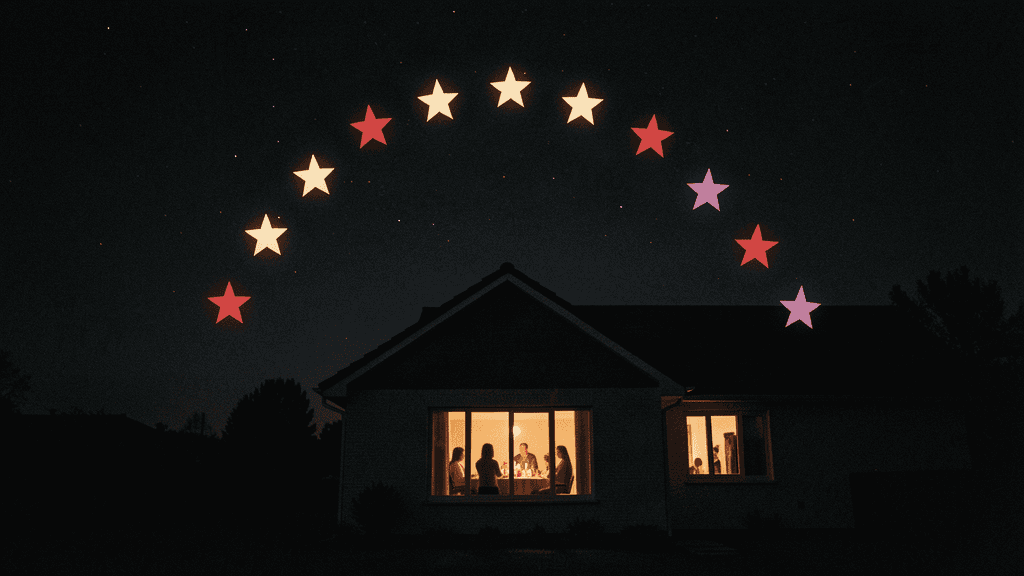
If you want separate spoken messages from up to 25 people, collected through a shareable link, with no app or accounts for the usual path, Starcard is one option at $9.99 once. Messages can be up to three minutes. An optional riddle lock can create a small unlock moment before the recipient opens the private night sky presentation (presentation only, not an astronomy theme). Organizer previews play the first 4 seconds of every saved voice. The finished gift plays every message in full for the recipient.
Use it when hearing familiar voices matters more than a shared screening. If writers outnumber talkers, a board may be smoother. If the group already loves filming and someone will edit, a montage can still be the celebration film.
Invite copy you can paste
Private group invite: "We are collecting a surprise for [Name]'s [occasion]. Please leave a short voice note (or written note if voice is hard) with one specific memory. No need to be on camera. Deadline: [date and time in recipient's city]. Link: [link]. Please keep this chat private."
Gentle reminder: "Quick nudge for [Name]'s surprise. One memory is enough. Link again: [link]. Deadline still [date]. Thank you."
Delivery timing tips
Deliver when the recipient can listen privately if the gift is emotional. Morning coffee in their zone often beats a late work night. If a partner will present it, give them the link early and a one-line intro script. Do not dump the surprise into a noisy group call where half the contributors are muted ghosts.
What not to do
Do not require a live Zoom for contribution. Do not put the only copy of the gift inside a work account someone will lose. Do not chase non-responders in a chat that includes the recipient. Do not start collection the day before. Do not force video on camera-shy relatives. Do not spoil the surprise with a public fundraising post unless the recipient already knows.
Make the ask async and specific
Long-distance surprises work when the ask is async, the prompt is specific, and the medium matches the people. Pick voice, board, or video on purpose. Protect the surprise chat. Deliver on the recipient's clock. If a private group voice keepsake fits, start one at starcard.gift and paste the contributor link into the invite above.
How far in advance should we start a long-distance surprise gift?
Start 7 to 14 days out for most circles. Give it longer if the list is large or includes people who rarely check chat. A same-day ask leaves distant relatives out.
What is the best group gift when family lives in different time zones?
There is no single best tool. Voice keepsakes fit talkers across zones. Boards fit writers. Video montages fit camera-happy groups with an editor. Match the medium to who will actually participate.
Should we do a live call and an async gift?
Yes. Keep the live toast short for whoever can join, and let async messages carry the people who cannot make the hour.
How do we keep the surprise if people are on different messaging apps?
Create one private contributor thread, or send individual invites, and keep the recipient out of it. Re-share the same link in every chat so nobody hunts for a second URL.
How much does a Starcard long-distance voice gift cost?
Starcard is $9.99 one time for up to 25 contributors and messages up to three minutes. Organizer previews play the first 4 seconds of every saved voice. The finished gift plays every message in full for the recipient.
If a private group voice keepsake fits the circle, start one, share the link across time zones, and deliver when the recipient can open it privately.
A Starcard costs less than a Starbucks coffee. Up to 25 contributors can record, and each message can run up to 3 minutes.
Create a Starcard